

The Trump administration is going to great lengths to amplify its fascistic veneer, even as it fails to shed its characteristic stupidity and David Lynch-esque surreality. You probably assume I’m about to cite the Venezuela incursion or ICE’s murder of Renee Good, but these moments are escalations of precedents in American history. They are bad, but I would argue they are not deviations from America’s long-festering brand of authoritarianism.
No, what shat my pants was Trump’s Department of Justice opening a bogus investigation into the Chairman of the Federal Reserve. Their patently obvious goal is to bully him into enacting the administration’s preferred monetary policies. The American government has inflicted great cruelty to its populace and the populace of other countries since its founding. Political actors using the threat of state violence to influence the historic independence of the central banking system is a through-the-looking-glass moment. There are no precedents for this in American history.
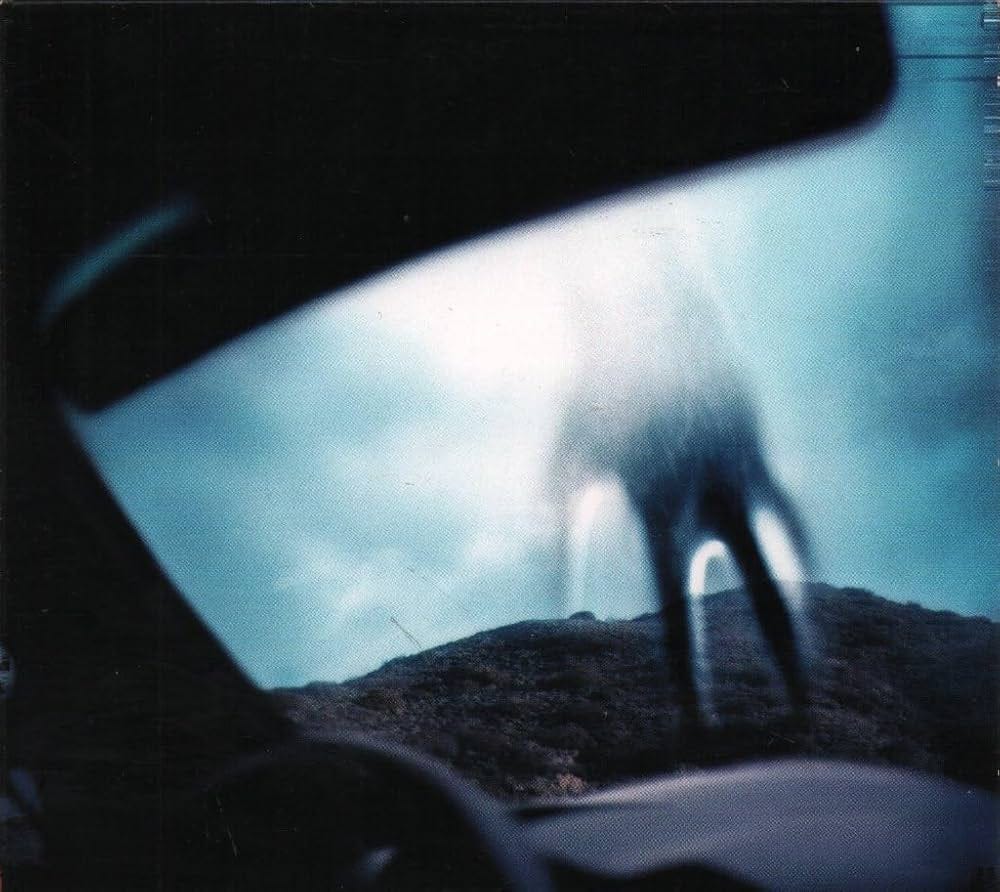
With my personal and political anxiety escalating, I revisited Year Zero, an electronica-infused rock album by Nine Inch Nails, a monkier for Trent Reznor, who’s now mostly known as a composer for film and television.
Written in late 2006 at the height of the War on Terror with the Bush-era’s Christian dominionist neoconservatism firmly on its mind, Year Zero is an explicitly political work from an apolitical artist. It lambasts the far right while imagining an Orwellian future they rule over.
The 2007 release was preceded by a digital marketing campaign consisting of dozens and dozens of webpages that weren’t advertisements as much as they were experiments in worldbuilding and creative writing. Fourteen-year-old Dan devoured all of it. Adult Dan has forgotten all of it (aside from the general contours).
Here’s the basic schtick: These webpages were supposed to be government documents from 2022, sent back in time by a group of computer scientists secretly working to prevent the rise of a fascistic American government and avert a global apocalypse. They paint a bleak if familiar dystopian picture. The government is poisoning the water supply with mood stabilizers to control the population! Endless wars in the Middle East with no clear objective! Unchecked Christian nationalism! They’re detaining immigrants! The secret police are torturing and outright murdering American citizens! Widespread poverty! Nobody has any health insurance! There’s a terrorist attack on a football stadium!1 Frankly, the only science fiction element is Philip K. Dick inspired: a psychadelic that causes widespread visions of a hand-shaped supernatural entity that plans to wipe humanity from the face of the Earth to protect the planet from being ravaged by climate change.
This epistolary pseudo-novel provides context for the lyrical ideas presented in Year Zero. Naturally, then, the record is often thought of as a concept album, but I’m not sure that’s a good label. There is no narrative to be found, no sense of cause and effect, and no clearly identified protagonists, unlike what you would find in traditional concept albums like Green Day’s contemporaneous American Idiot and 21st Century Breakdown, or the rock operas of yesteryear like Tommy and The Wall.
Instead, Year Zero presents as a series of character sketches exploring how people survive a cruel and uncaring authoritarian nightmare. The songs are synth-based and backed by distorted drum loops and bass lines; guitars, the typical staple of any rock album, punctuate the soundscape but rarely serve as a musical backbone. Rather than end on a heightened repeat of the chorus, tracks will climax with an instrumental section that builds in tension, sonically underlining the narrator’s discontent, and then end in abrupt silence. To call some of these sections “music” may or may not be a misclassification. Some could be more accurately described as sound collages. While they lack a cohesive melody, their aggressive tempo and clear sense of rhythm would put them at least somewhat at home in a dance club, unlike The Beatles’ completely impenetrable “Revolution #9.”
Most of our lyrical narrators are not doing well. The album’s lead single, “Survivalism,” is an angst-ridden embrace of abandoning your morals because it’s the only way to get ahead. “The Good Soldier” depicts its titular character losing faith as he inflicts violence at home and abroad. “Vessel” follows its narrator escaping his disturbing reality by becoming a drug addict. The glitchy but groovy “Me, I’m Not” is a plea for society to slow down, its narrator realizing, far too late, that the arrival of his desired brand of fascism has only made his life worse; the only way he can survive is “knowing not to fight.”
“Meet Your Master” and “My Violent Heart” are rallying cries for resistance, but they do not offer much hope. The former is laden with childish sexual innuendos and suggests a revenge fantasy that fails to change anything. The latter suggests an underclass rising up, but never escapes the imagery of crawling around on hands and knees. “The Great Destroyer,” meanwhile, depicts a lone wolf mass shooter planning nihilistic violence, praying the surveillance state doesn’t realize he has the potential to “murder everyone.”
The most interesting song on the record, both lyrically and musically, comes from the point of view of a business-class fascist. “Capital G,” the album’s only track with anything approaching a traditional pop sensibility, is propelled by a funky synth bass line and a live drummer (one of only two tracks with a rhythm section that isn’t a drum machine) banging out a syncopated beat on a synthesizer drum set. The vocal delivery carries a showtune flair that recalls “King Herod’s Song” in Jesus Christ Superstar.2 It’s basically an Andrew Lloyd Webber song with swear words.
The song’s narrator makes the only mention in the album of a person leading the country, singing in a jumprope chant-esque rhythm:
I pushed the button and elected him to office and
He pushed the button and he dropped the bomb
You pushed the button and could watch it on the television
Those motherfuckers didn't last too long
He offers no regrets or second thoughts, and instead complains about how sick he is of hearing about “the haves and the have-nots,” how he thinks the poor should be grateful for what paltry sums they have, and that people are only mad at him because they are jealous. The class-conscious verses give way to a punk rock-inflected chorus where he unapologetically defends himself, arguing that people are as selfish as he is, and that this new god (greed) is one he’s happy to obey:
I used to stand for something
But forgot what that could be
There’s a lot of me inside you
Maybe you’re afraid to see
I used to stand for something
Now I’m on my hands and knees
Traded in my god for this one
And he signs his name with a capital G
The chorus is held together by a chromatic cycle of triumphant major chords3, and there are some tricks that suggest the narrator is the butt of a joke. When the chorus repeats after the guitar solo bridge, it comes at us with an increasing number of vocal countermelodies. There are simple shouted gang vocals typical of alt-rock, but the song also introduces doo-woopy, Beatles-esque vocal harmonies. The song reaches its resolution as a backing vocal line descends the scale in sarcastic homage to “With a Little Help from My Friends.”
The final two songs on the album, “In This Twilight” and “Zero Sum,” depict an apocalypse that uses biblical imagery to suggest its supernatural nature (“Dust to dust / Ashes in your hair remind me”). The songs, as you’ll likely guess from those two lines, are both sentimental and cynical. They’re mid-tempo, and depict narrators wondering whether they could have been better people and coping with the end by embracing a doomed love.
Some contemporary reviews criticized this section as moralistic. The Worldwide Socialist Web Site4 wrote:
The role of various social forces is brushed aside [in Year Zero] and the onus is placed on humanity as a whole. The population is guilty, apparently, of accepting or even preparing its own miserable fate. Along with everything else, this is simply lazy and superficial.
But this is a severe misreading. While the album’s point of view is that we do indeed share some amount of collective guilt for the human condition, it does not making an angry condemnation. “Zero Sum” is a piano ballad, its verses spoken word poems and its chorus vocals dubbed and redubbed to such an extent that it suggests a choir. The tone is lamenting. An acceptance of the consequences of humanity’s inherent flaws. It is a longing for a better world and an understanding that one was probably never possible. Perhaps it is defeatist, but its leaves me with a feeling that I had in 2016 and 2020 when Bernie failed to secure a nomination, when Trump won in 2016 and 2024, and when Michigan got knocked out of the College Football Playoff in 2022, all events of similar historic importance. Clearly.
Music communicates feelings, not ideas or comprehensive descriptions of systems. Emotions are abstract and often difficult to put into words, let alone coherent sentences. A lyric can try to convey love, joy, despair—but language is limited. It is the sequence of notes and the harmonies of the underlying chords that transmit inner humanity in a way that prose, imagery, and dramatic action simply cannot. Music generates empathy wordlessly. It is the closest thing we have to psychic communication.
There are no good songs with great lyrics and trite melodies. There are many good songs with trite lyrics and great melodies; that is much of Reznor’s output as a songwriter. He has a tremendous ear, is a talented keyboardist, and demonstrates a unique sense of melody (when he chooses to embrace it), but most of the man’s lyrical output is yeesh-inducing. Nevertheless, he gets his idea across and delivers them with such conviction that you can forgive the repetitive rhyme schemes and adolescent word choice.
If there is a complaint to be lodged against Year Zero, it isn’t in the musicianship or the limited lyricism—it’s that the experience is very much a sum of its parts. The songs work together when listening to the record as a traditional LP, putting it on and listening from start to finish, but they feel less impactful as isolated pieces. There isn’t an easily accessible piece of songcraft here other than “Capital G.”
But much in the same way that the album does not outright condemn humanity, I don’t mean that as a condemnation of the album. As a 63-minute musical encapsulation of what it feels like to live in a rapidly breaking authoritarian society, Year Zero conveys a sense of dread, anger, frustration, and hopelessness that will feel familiar in a way that’s unlike any other rock record. If you’re feeling bad and want to feel worse, this is the music to put on. You can find something else if you want to feel better, but at the very least Year Zero won’t patronize you.
Sports reference! Sports reference! This entry is not completely out of place on this blog because there’s a sports reference!
I mean this in terms of vibe and narrative tone; Capital G does not feature a honky-tonk piano. Or if it does, it’s really buried in the mix.
For the nerds out there, the chord progression is I - VI#5 - IIIadd9 - IV in the key of D.
This website’s run by “International Committee of the Fourth International (ICFI),” which I had never heard of until searching for reviews of Year Zero, but clearly they are doing a great job building communism.